Cardboard packaging is an integral part of everyday life, both in industrial and domestic applications. It is indispensable for the transportation, storage, and presentation of various products. To ensure consistency and compliance of cardboard packaging on the European market, the Fefco catalog was created.
What is Fefco?
Fefco, meaning European Federation of Corrugated Board Manufacturers (European Federation of Corrugated Board Manufacturers), is an organization representing the packaging industry. For over sixty years, Fefco has been developing standards and codes for corrugated packaging that are used by manufacturers across the continent.
The main goal Fefco catalog This ensures uniformity and clarity in the description of different types of cardboard packaging. The catalog contains detailed information on box construction. This allows manufacturers and clients to communicate and collaborate based on a shared understanding.
Fefco catalog contents
The Fefco catalog contains various types of cardboard packaging, which are classified using unique codes. Each code consists of four digits that precisely identify a specific type of packaging. The first two digits indicate the packaging type, while the last two digits specify the serial number. In the case of designations interior box fittings (cardboard inserts) the situation is slightly different. Here, the last two digits indicate the number of panels used to make a given insert.
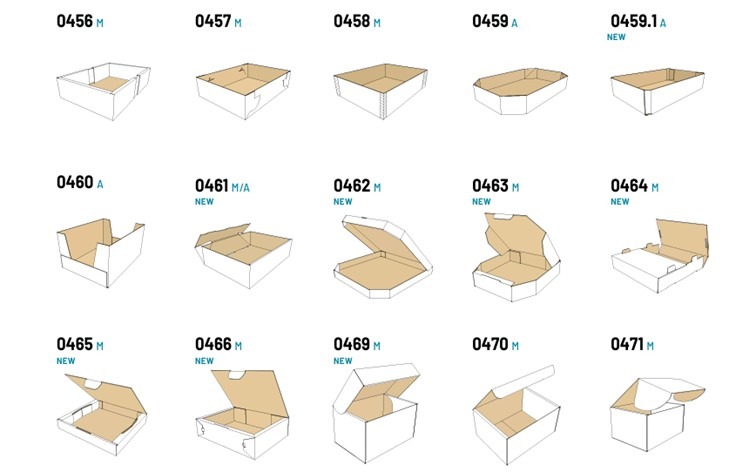
Cardboard packaging has been divided into 7 main groups:
- 02 – Flap packaging
Folding boxes Made from a single piece of cardboard with a factory-attached connector (glued, stapled, or taped) and top and bottom flaps. They are shipped flat, ready for use, and require closing using the flaps provided.
- 03 – Telescopic Packaging
Telescoping boxes usually consist of more than one part, such as a top and a bottom, which fit together.
- 04 – Folding cartons and trays
Folding boxes and trays are most often made from a single piece of cardboard. The bottom of the box is hinged to form two or all of the side walls and the lid. Some designs may incorporate locking tabs, handles, etc.
- 05 – Slide-in packaging
Slide-in boxes consist of several pieces of inserts and sleeves that slide into one another in different directions. This category also includes outer sleeves for other types of packaging.
- 06 – Permanently Bonded Packaging
Permanently assembled boxes consist of two separate parts and a body, which must be stapled or similarly fastened before the product can be used.
- 07 - One-piece glued packaging
One-piece glued boxes essentially consist of a single piece of cardboard, are shipped flat, and are ready for use after simple assembly.
- 08 – Retail and e-commerce packaging
The "Retail and E-commerce Packaging" category showcases typical designs used in displays and stands at points of sale (SRP packaging) and also in e-commerce.
Examples of FEFCO catalog boxes
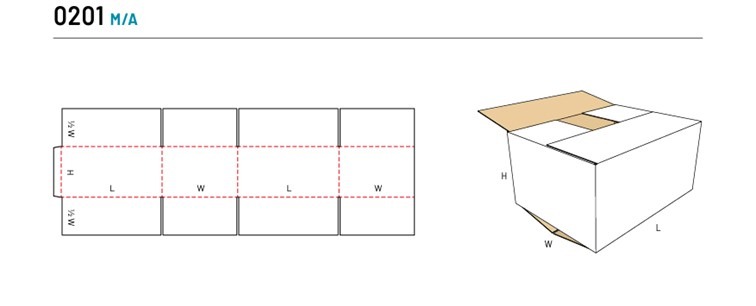
The Fefco 0201 code refers to a "Regular Slotted Container" (RSC), which is a standard, flat-folding container cardboard box. This type of packaging is widely used in many industries because of its simplicity and functionality. We’ve probably all used this type of cardboard box when moving or storing unwanted items in the attic.
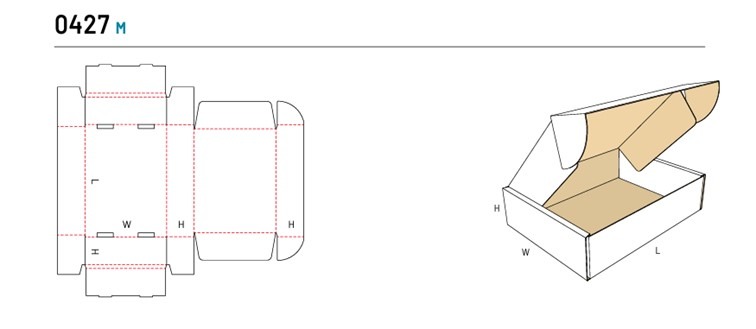
On the other hand, Model Fefco 0427 It is widely used in the shipping industry. Its popularity stems from two main advantages: a robust construction that effectively protects the contents, and distinctive wings that prevent the box from opening accidentally. Additionally, there is a version with an extra adhesive strip for even greater security.
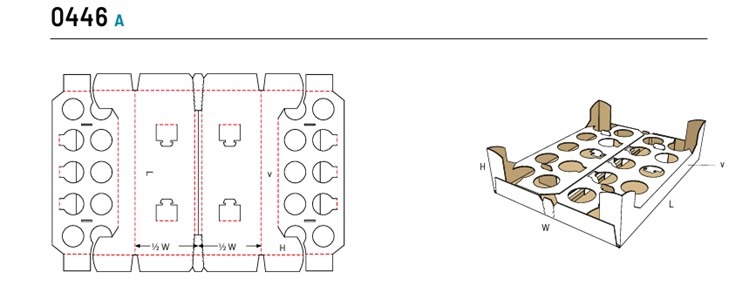
On the other hand, Fefco 0446 describes a popular packaging box that finds its application in the food industry. It is often found on store shelves, where it serves as an ideal container for yogurts and other products. Thanks to its design, products are held in the correct position, preventing them from shifting. Model 0446 was designed to ensure not only product safety but also their aesthetic and functional presentation in the store. This approach makes it a popular choice among manufacturers and retailers.
In addition to the seven groups of cardboard packaging listed above, two further categories can be identified. The first, designated as 01, includes various types of rolls and sheets used primarily in commerce. Group 09, on the other hand, includes all items intended for placement inside boxes, used to separate or stabilize the contents.
It is worth noting that the Fefco catalog does not specify exact dimensions, but only proportions. Each Fefco model is available in various sizes. The individual dimensions are denoted by the capital letters L x W x H, where each letter stands for, in order: length x width x height.
The Fefco catalog contains not only codes and descriptions of packaging, but also detailed technical drawings that graphically illustrate their construction. These drawings are extremely useful for packaging designers, who can accurately understand how to assemble and construct a given model.
Lines in the Fefco catalog
The FEFCO catalog features illustrations showing lines that represent packaging processing techniques.

The first of these is the cut lines. They indicate the places where the cardboard is precisely cut, which makes it easy to assemble the package.
In turn, the second line indicates the creasing lines. They emboss the appropriate folds in the material, making it easier to fold and ensuring a solid structure for the packaging.
However, the third line is a partial cut line, which is used to allow for easy opening of the packaging or for additional features like envelope inserts or windows.
The fourth line defines perforations, which create regular holes. These can be easily torn, which is useful, for example, in food packaging.
The fifth line is the line below the tape. Specially designed to place tape on the packaging, which provides additional security and stability.
The last line is a tear strip, which allows for easy and precise opening of the package, usually used for packaging consumer products that require quick access.
These diverse lines in the Fefco catalog are crucial for packaging design as they enable precise customization of cardboard to specific needs, ensuring necessary functionality and durability.
Information consistency
The advantage of using the Fefco catalog lies in the clarity and consistency of information. This allows manufacturers to precisely specify their requirements to packaging suppliers, and suppliers know what standards they must meet to satisfy customer expectations. It also facilitates cooperation between different entities in the supply chain.
The Fefco catalog is an extremely useful tool for everyone involved in the corrugated packaging industry. It provides clarity, consistency, and standardization, which are crucial for efficient production, logistics, and product protection. With this, the Fefco catalog contributes to improving efficiency and sustainable development in the packaging sector.
Important tool
In summary, the Fefco catalog is an essential source of information for manufacturers, designers, and customers. With its clear codes and detailed descriptions, it ensures consistency and clarity in communication regarding different types of packaging. It is an important tool that contributes to the development of standards in the packaging industry and facilitates collaboration among producers and cardboard packaging users.